 MyTrackers
See it live
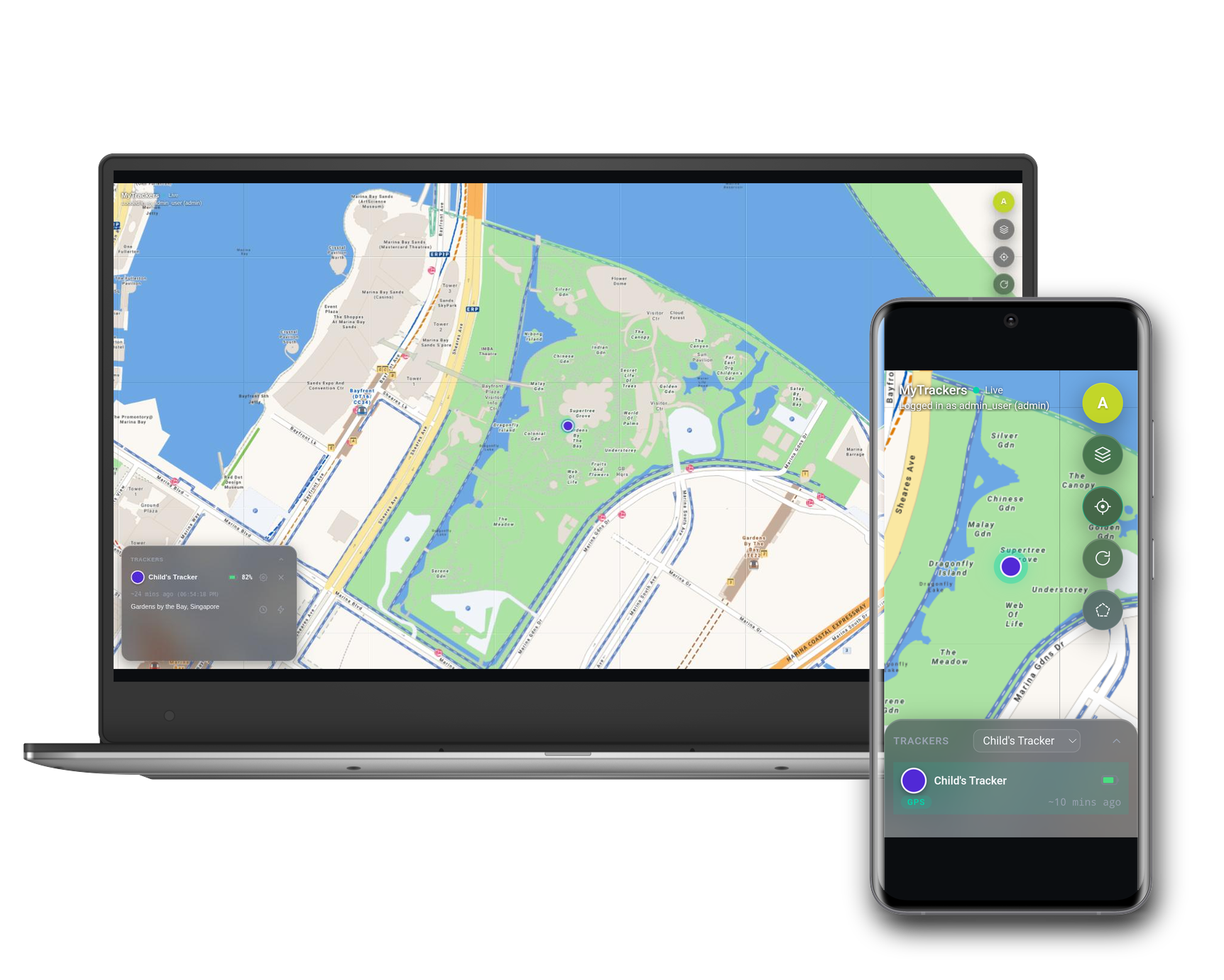
One map, updated the moment it reports.
Live position and battery level, on a map only you can open. No app: just a page on your own server.
A discreet tracker that sits in the school bag — no screen, no apps, nothing to confiscate. You'll know they got there and got home, and no one else ever will.
Example alerts — yours will show your child's own schedule.
Same for tuition, and a heads-up if the battery's getting low. Usually, that's enough.
Too much device — apps, messaging, social media, and now often banned at school anyway.
A screen with a strap. Same distractions, same confiscation risk, in miniature.
No visibility at all — you just wait for them to text or call when they arrive, if they remember to.
Just the safety information you actually need, and nothing else riding along with it.
Live position and battery level, on a map only you can open. No app: just a page on your own server.
An AirTag doesn't track in real time on its own — it only reports when a nearby iPhone happens to pass by. It's built to help you find a misplaced wallet, not to know where your child is right now.
| MyTrackers | AirTag | |
|---|---|---|
| Designed for | Students | Objects |
| Real-time tracking? | Yes | No — relies on nearby iPhones passing by |
| School arrival/departure alerts? | Yes | No |
| Geofencing? | Included | Not built for this |
| Parent-focused dashboard? | Yes | No |
GPS smartwatches like TickTalk and imoo are phones wearing a tracker's marketing: calling, messaging, app stores, a touchscreen. That's exactly why so many schools ban them outright, and why teachers confiscate the ones that slip through.
| MyTrackers | Smartwatch | |
|---|---|---|
| Location | Yes | Yes |
| Screen | None | Yes |
| Messaging | None | Yes |
| Games / apps | None | Yes |
| Gets confiscated at school? | Nothing to confiscate | Frequently |
| Charging routine | Once a month | Daily |
| Subscription | No | Usually |
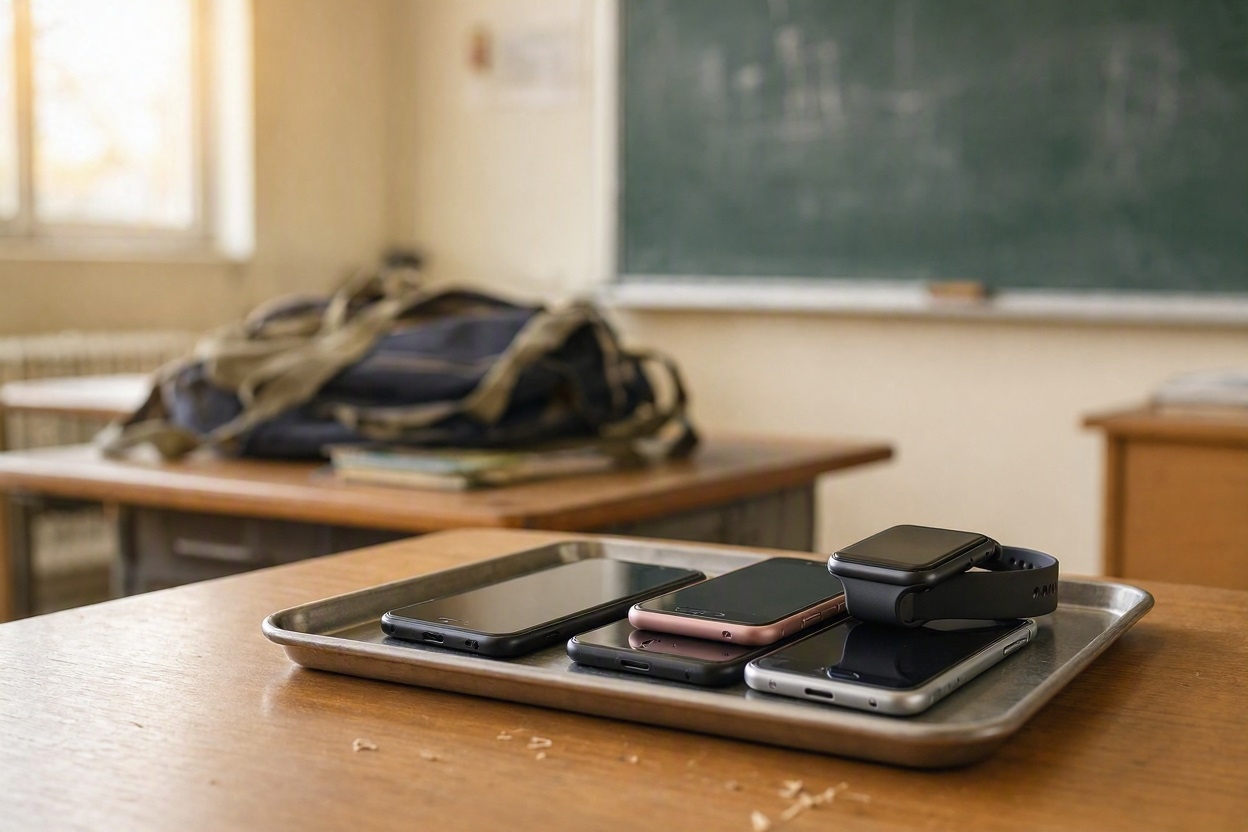
MyTrackers isn't a phone in a smaller box. It just reports location, silently, in the background. There's nothing on it a teacher would confiscate and nothing on it for a child to be distracted by, because there's nothing to interact with in the first place.
Singapore's Ministry of Education has confirmed an all-day ban on smartphones and smartwatches in secondary schools from January 2026, covering lessons, recess, and CCAs, and extending rules already in place for primary schools since January 2025. Source: Ministry of Education, Singapore ↗
A smartphone can do this too. It can also do everything else.
| MyTrackers | Smartphone | |
|---|---|---|
| Location updates | Yes | Yes |
| Social media, games, messaging | None | Yes |
| Covered by the school phone ban | Not affected | Banned in secondary schools from 2026 |
Many GPS trackers were built for cars, fleets, and pets first.
| MyTrackers | Subscription tracker | |
|---|---|---|
| Ongoing cost | S$0, ever | S$5-15/month, forever |
| If the company shuts down | Keeps working | Becomes a paperweight |
| Who owns the location history | You | Them |
This started as a tracker for my own children. I wanted to know they were safe without handing their location to a company I'd never met. Once it worked, the gap in the market became obvious: every option out there was either a subscription that never stops, or a device that quietly ships your child's location to someone else's cloud. Neither sat right with me.
MyTrackers is what I built once I decided to do it properly, with a parent's actual priorities: know where your kid is, and keep that information exactly where it belongs, with you. There's a simple bar it has to clear before anyone else gets it, too. I don't put this in another family's hands unless it's good enough that I'd still trust it with my own.
Your child's location goes straight from the tracker to a small receiver at your own home — never a third stop, never a company server in between.
There's no cloud database of your child's location — we don't operate one to begin with, so there's nothing of ours to leak, breach, or sell access to. How privacy works, in full →
This isn't a hypothetical risk we're getting ahead of. Security researchers have repeatedly found GPS and smartwatch trackers exposing real-time location data through unsecured cloud databases — one documented case alone exposed the exact coordinates of over 600,000 children and elderly users. Every one of those devices worked by sending location data to someone else's server first. MyTrackers' home-receiver design means that server doesn't exist for us to secure, or fail to.
At its default setting, checking in every 30 minutes across a realistic daily routine (roughly 8 hours asleep, 8 hours at home, 8 hours out and about), MyTrackers runs for at least 30 days on a single charge, measured from real devices under real usage, not a lab estimate.
Most "30-day battery" claims in this category are measured on the slowest, cheapest tier, often an hour or more between updates, with faster check-ins locked behind a pricier plan and the battery life quietly dropping once you pay for it. There's no such tier here: every plan is the same plan, and 30+ days is what you get at a real 30-minute cadence, not a once-an-hour worst case.
That's still just the default. Want tighter location accuracy, or updates every few minutes instead of every 30? You can turn either up yourself, for free — your call, not a higher-tier upsell.
Quiet check-ins on home Wi-Fi. Practically free.
~0% usedReporting over cellular while away from home. The one stretch that actually costs battery — and the one stretch where a smart location algorithm works hardest to keep that cost down.
The real expenseRecognises its own Wi-Fi and drops back to near-zero cost.
~0% usedString these days together and you get 30+ days. Not a projection — what a normal day costs.
About the size of a chunky phone charger (12.4 × 5.0 × 3.2 cm, 105g) — smaller than most power banks, easy to tuck into a side pocket and forget about. Cellular plus GPS inside, built to sit in a bag or backpack, not clip onto a collar or ride in a pocket.
It's paired with a small dedicated receiver, included with your purchase and not something you have to supply yourself, that runs at home rather than in someone else's cloud, quietly storing every position the tracker sends it.
One device. One payment. No subscription. 270 SGD total (220 tracker + 50 receiver).
Why more than an AirTag? An AirTag doesn't track in real time on its own — it only reports when a nearby iPhone happens to pass by. MyTrackers carries its own cellular connection, so it knows where your child is the moment you check, not whenever a stranger's phone happens to be nearby. You're paying for a dedicated safety device, not a Bluetooth tag pressed into service for it.
Tracker and home server arrive together. Nothing sold separately.
One guided step links it to your home server, for good. No password, no app store — just a one-time email link.
It checks in on its own schedule and shows up on a map only you can open. The only thing it'll still ask of you: recharging.
MyTrackers is pre-launch — hardware is in development and being tested against the exact conditions described on this page, not a lab bench. We'll share real numbers and real families' experiences here as soon as we have them, not before.
Leave your email and we'll reach out when early access opens. Singapore only for now.
We'll only ever use this to email you about launch. See our Privacy Policy.
No subscription. No central database of your child's location. Just a tracker and a home device that are entirely yours.
Get early accessAlready have a device? Sign in to claim it.